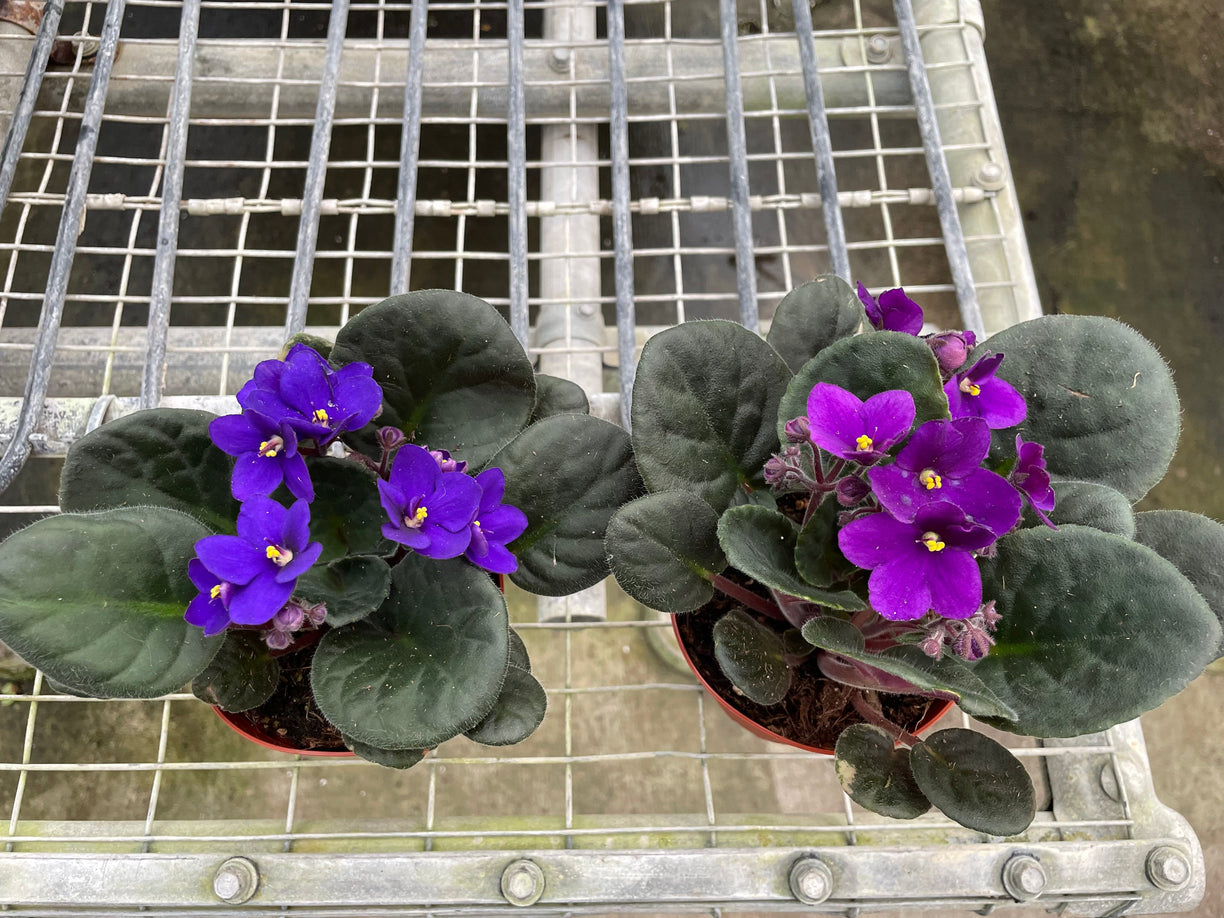
African Violet 'Purple' 4” NURSERY POT ONLY
African Violet 'Purple' 4” NURSERY POT ONLY
Couldn't load pickup availability
- Botanical Name: Saintpaulia ionantha
- Common Names: African Violet
-
Description: The African Violet is a small, herbaceous perennial plant native to Tanzania and southeastern Kenya. It is known for its velvety, heart-shaped leaves and its delicate, colorful flowers that bloom in shades of purple, pink, blue, and white. The plant typically grows to be around 6-8 inches tall and wide, making it a great choice for indoor spaces as a tabletop or windowsill plant. African Violets require bright, indirect light and consistent watering to thrive, preferring slightly moist soil. They are popular for their stunning blooms and ease of care, making them a favorite among indoor gardeners. The plant is also known for its air-purifying properties, helping to remove toxins from the air and create a healthier living environment.
They're such lovely and vibrant plants. Here are some care tips for your African Violet:
1. Light: African Violets prefer bright, indirect light. Place them near a north or east-facing window where they can receive bright, filtered light. Avoid direct sunlight, as it can scorch the leaves.
2. Watering: African Violets like to be kept evenly moist. Water them from the bottom by placing the pot in a saucer filled with water. Let the plant soak up the water for about 30 minutes, then remove any excess water. Avoid getting water on the leaves, as it can cause spotting. It's best to use room temperature or lukewarm water.
3. Humidity: African Violets appreciate higher humidity levels. You can increase humidity by placing a tray with water near the plant or using a humidifier. Another option is to group your African Violet with other plants to create a more humid microclimate.
4. Temperature: African Violets prefer temperatures between 65-75°F (18-24°C). Avoid exposing them to extreme temperature fluctuations or drafts, as they can be sensitive to temperature changes.
5. Soil: African Violets require a well-draining, slightly acidic soil mix. You can find specialized African Violet potting mixes at garden centers or create your own by combining peat moss, perlite, and vermiculite.
6. Fertilizing: Feed your African Violet with a balanced, water-soluble fertilizer specifically formulated for African Violets. Follow the instructions on the fertilizer package for the correct dilution ratio and frequency. Fertilize during the growing season (spring and summer) and reduce or stop fertilizing during the dormant period (fall and winter).
7. Pruning: If your African Violet becomes leggy or overgrown, you can trim back the long stems to encourage bushier growth. Remove any yellow or dead leaves to keep the plant healthy.
Remember to keep an eye out for common African Violet pests like aphids or spider mites. If you notice any signs of infestation, treat them promptly with an appropriate insecticidal soap or neem oil.
I hope these tips help you care for your African Violet! Let me know if you have any more questions.
Share