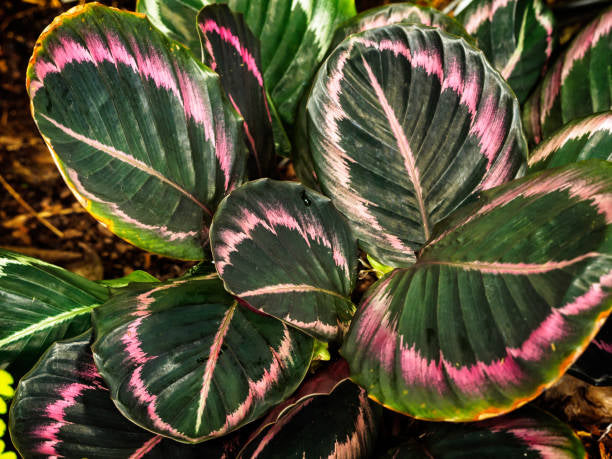
Calathea 'Dottie' 6" NURSERY POT ONLY
Calathea 'Dottie' 6" NURSERY POT ONLY
Couldn't load pickup availability
- Botanical Name: Calathea 'Dottie'
- Common Names: Peacock Plant, Zebra Plant
- Description: There are several dozen species in this genus. Native to the tropical Americas, many of the species are popular as pot plants due to their decorative leaves and, in some species, colorful inflorescence. They are commonly called calatheas or (like their relatives) prayer plants.
Leaves will change color under different lighting environments
Ah, the Calathea 'Dottie'! It's a beautiful plant with its striking dark purple leaves and pink stripes. Here are some care tips for your Calathea 'Dottie':
1. Light: Calathea 'Dottie' prefers bright, indirect light. Avoid placing it in direct sunlight as it can scorch the leaves. A spot near a north or east-facing window would be ideal.
2. Watering: Keep the soil consistently moist but not soggy. Calatheas like to be kept evenly moist, so water it when the top inch of soil feels dry. Use filtered or distilled water to avoid chlorine or fluoride buildup.
3. Humidity: Calathea 'Dottie' thrives in high humidity. You can increase humidity by misting the leaves regularly or placing a tray of water near the plant. Alternatively, you can use a humidifier to create a more humid environment.
4. Temperature: Calatheas prefer temperatures between 65-80°F (18-27°C). Avoid exposing them to cold drafts or temperatures below 60°F (15°C).
5. Soil: Use a well-draining potting mix that retains some moisture. A mixture of peat moss, perlite, and regular potting soil works well for Calatheas. Ensure that the pot has drainage holes to prevent waterlogging.
6. Fertilizing: Feed your Calathea 'Dottie' with a balanced, water-soluble fertilizer every 2-4 weeks during the growing season (spring and summer). Dilute the fertilizer to half the recommended strength to avoid over-fertilization.
7. Pruning: If your Calathea 'Dottie' develops any brown or yellow leaves, you can trim them off to maintain its appearance. Use clean, sharp pruning shears to avoid introducing any infections.
8. Toxicity: Keep in mind that Calatheas are non-toxic to pets and humans, which is great news!
Remember, Calatheas are known for their "prayer plant" behavior, where their leaves move in response to light. It's normal for the leaves to open during the day and close at night.
I hope these care tips help you keep your Calathea 'Dottie' thriving! Let me know if you have any more questions. 🌿😊
Share