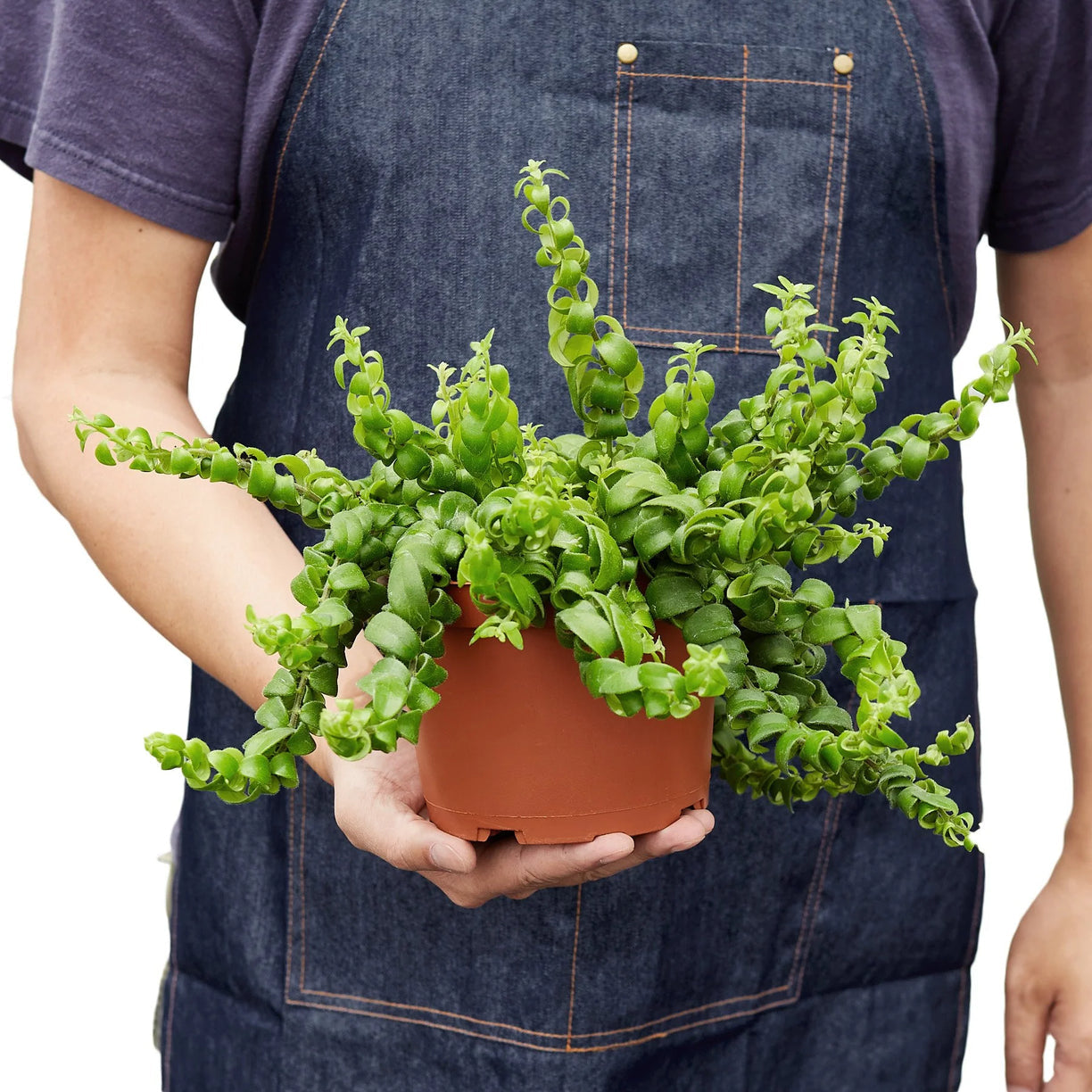
Curly Lipstick Plant - 4” NURSERY POT ONLY
Curly Lipstick Plant - 4” NURSERY POT ONLY
Couldn't load pickup availability
- Botanical Name: Aeschynanthus radicans
- Common Name(s): Lipstick Curly
- Description: This Hanging Lipstick plant gets it to name for the shape and pattern that resembles a miniature tube of women's lipstick on its stems. This trailing plant great for bright windows and bright kitchens.
Lighting: The Curly Lipstick plant thrives in bright, indirect light. It's best to place it near a window where it can get filtered sunlight. Direct sunlight should be avoided to prevent leaf damage.
Watering: The Curly Lipstick plant enjoys consistent moisture in the soil. Ensure the soil is evenly moist but not waterlogged. It's essential to allow the top inch of soil to dry out between waterings to prevent overwatering.
Humidity: The Curly Lipstick plant prefers moderate to high humidity levels. You can increase humidity by misting the plant regularly, using a humidifier, or placing a tray of water near the plant. This will help create a more favorable environment for the plant's growth.
Soil: The Curly Lipstick plant does well in well-draining, peat-based soil. It's essential to ensure the soil is not waterlogged to prevent root rot. A good quality potting mix designed for tropical plants would be suitable for your Curly Lipstick plant.
Temperature: The Curly Lipstick plant prefers temperatures between 65-80°F (18-27°C). It's important to avoid exposing the plant to temperatures below 55°F (13°C) as it can harm the plant. Consistent temperatures within the recommended range will help your plant thrive.
Fertilizer: The Curly Lipstick plant benefits from a balanced liquid fertilizer diluted to half strength. You can fertilize the plant during the growing season, typically from spring to early fall, about once a month. Remember to follow the instructions on the fertilizer package for the best results.
Pruning: The Curly Lipstick plant generally requires minimal pruning. You can trim any leggy or overgrown stems to encourage bushier growth. Additionally, removing any dead or damaged leaves can help maintain the plant's appearance and health.
Share