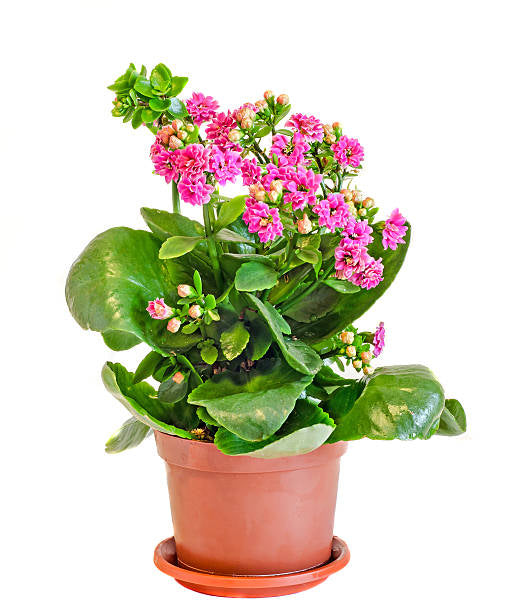
Kalanchoe 'Pink' 4” NURSERY POT ONLY
Kalanchoe 'Pink' 4” NURSERY POT ONLY
Couldn't load pickup availability
- Botanical Name: Kalanchoe blossfeldiana
- Common Names: Flaming Katy
- Description: Kalanchoe blossfeldiana, commonly called kalanchoe, is a dark green, succulent perennial with scallop-edged leaves and large umbels of flower clusters held above the foliage. It has an upright, multi-branched growth habit. These bright red, pink or yellow flower clusters last for weeks
I'd love to help you with caring for your Kalanchoe! Kalanchoe is a beautiful flowering succulent plant that can add a pop of color to your space. Here are some care tips for your Kalanchoe:
1. Light: Kalanchoe plants thrive in bright, indirect light. Place your Kalanchoe near a window where it can receive plenty of bright, filtered sunlight. Avoid direct sunlight, as it can scorch the leaves.
2. Watering: Kalanchoe plants prefer to be slightly on the drier side. Allow the soil to dry out between waterings, and then thoroughly water the plant. Be careful not to overwater, as it can lead to root rot. It's always better to underwater than to overwater.
3. Soil: Use a well-draining potting mix specifically designed for succulents or cacti. This type of soil will help prevent water from sitting around the roots and causing rot.
4. Temperature and Humidity: Kalanchoe plants prefer temperatures between 60-75°F (15-24°C). They can tolerate higher temperatures, but avoid exposing them to extreme heat or cold. As for humidity, they can tolerate normal household humidity levels.
5. Fertilizing: During the active growing season (spring and summer), you can feed your Kalanchoe with a balanced, diluted houseplant fertilizer once a month. Follow the instructions on the fertilizer package for the correct dilution ratio.
6. Pruning: Prune your Kalanchoe after it has finished flowering to encourage new growth. You can trim back any leggy or overgrown stems to maintain a compact shape.
7. Flowering: Kalanchoe plants are known for their vibrant and long-lasting flowers. To encourage blooming, make sure your plant receives enough sunlight and is not exposed to artificial light at night, as it can disrupt the flowering process.
Remember, Kalanchoe plants are toxic to pets if ingested, so it's important to keep them out of reach.
I hope these tips help you keep your Kalanchoe healthy and blooming! Let me know if you have any more questions. 🌺😊
Share