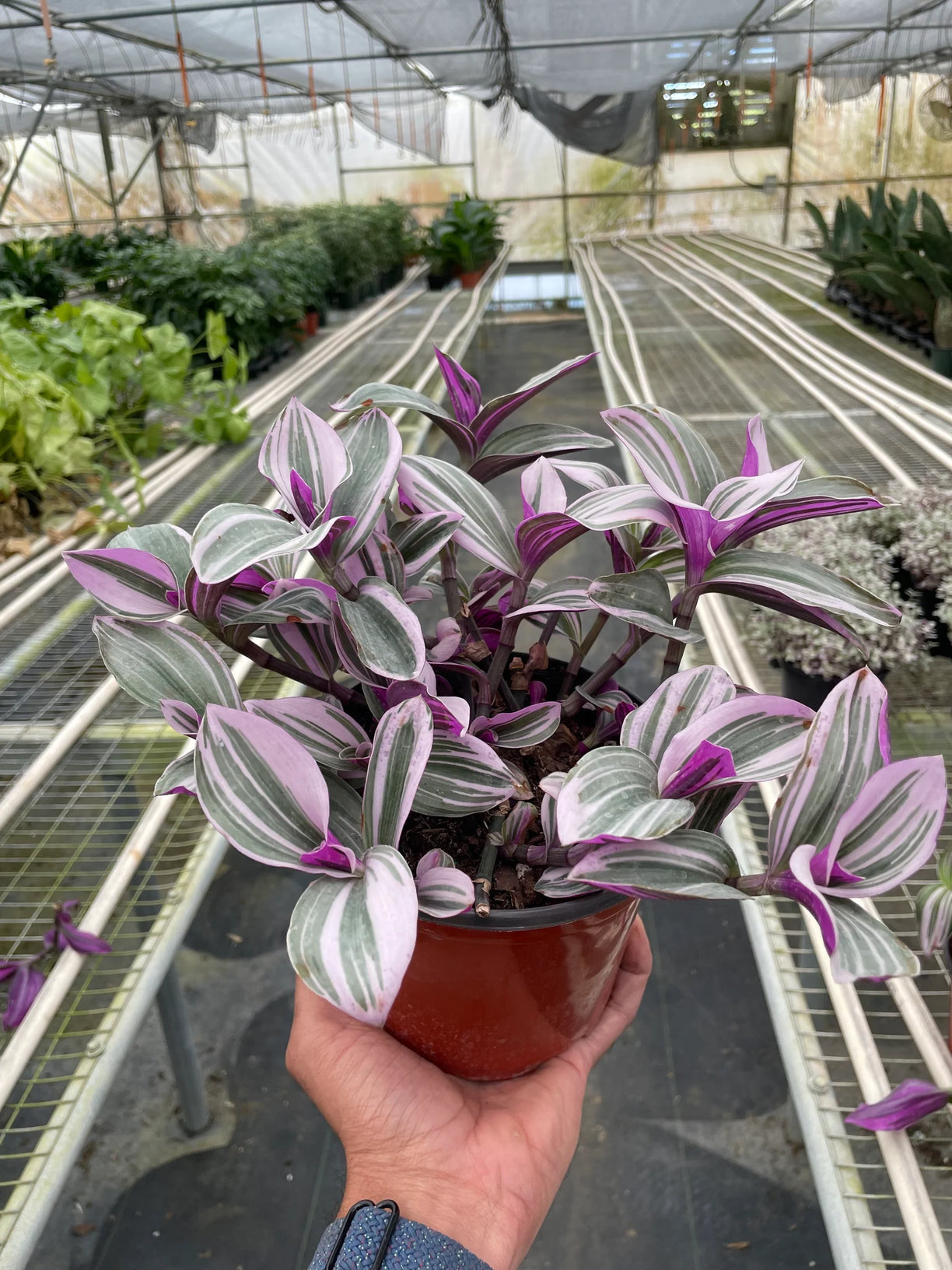
Tradescantia 'Nanouk' - 4” NURSERY POT ONLY
Tradescantia 'Nanouk' - 4” NURSERY POT ONLY
Couldn't load pickup availability
- Botanical Name: Tradescantia albiflora 'Nanouk'
- Common Names: Nanouk Tradescantia
- Description: Tradescantia albiflora ‘Nanouk’ is a low-growing trailing perennial known for its striking purple-green variegation and violet leaf undersides.
Lighting: The Tradescantia 'Nanouk' plant prefers bright, indirect light. It thrives in a spot with plenty of natural light but protected from direct sunlight, especially during the afternoon hours to prevent leaf scorching. Placing it near a window where it can receive filtered sunlight is ideal for this plant's growth.
Watering: The Tradescantia 'Nanouk' plant enjoys consistently moist soil but not waterlogged. It's important to water the plant when the top inch of the soil feels dry to the touch. Ensure proper drainage in the pot to prevent water accumulation, which can lead to root rot.
Humidity: The Tradescantia 'Nanouk' plant doesn't have specific humidity requirements and can generally adapt to normal household humidity levels. Just ensure it's not placed in an extremely dry environment, like near a heater, as that can lead to dryness in the plant's leaves.
Soil: The Tradescantia 'Nanouk' plant thrives in well-draining potting soil. A mix formulated for houseplants or a blend of peat moss, perlite, and coarse sand works well to provide adequate drainage for the plant.
Temperature: The Tradescantia 'Nanouk' plant prefers temperatures between 60-75°F (15-24°C). It's essential to avoid exposing the plant to cold drafts or sudden temperature fluctuations, as this can negatively impact its growth.
Fertilizer: The Tradescantia 'Nanouk' plant benefits from a balanced liquid fertilizer diluted to half strength. You can fertilize the plant every 2-4 weeks during the growing season (spring and summer) to support healthy growth.
Pruning: The Tradescantia 'Nanouk' plant benefits from regular pruning to encourage bushier growth and maintain its shape. You can trim back leggy stems to promote new growth and pinch off the tips to encourage branching. Regular pruning also helps manage the plant's size and appearance.
Share